Fair Trade - Page 3 of 4 - AlterNativa3

Author: Eugenia González.

What does Zero Waste mean, can you really live without waste, what can you do to avoid single-use plastic, and what is the relationship between Fair Trade and Zero Waste? And what is the relationship between Fair Trade and Zero Waste?

You've heard of Zero Waste, a philosophy of life that aims to reduce the waste you generate every day.

You find it logical, you see that it is necessary. But it becomes a mountain.

How can we reduce the amount of plastic in food packaging, and is it possible to combine the rush of modern life with the planning it requires?

You can imagine that perhaps a person living alone can more easily control the waste he or she generates. But what about a family?

I'll tell you:

I have been at Zero Waste for a year and a half. I do the best I can and, it's true, sometimes it's complicated... But I have found a practical way to live Zero Waste without being overwhelmed.

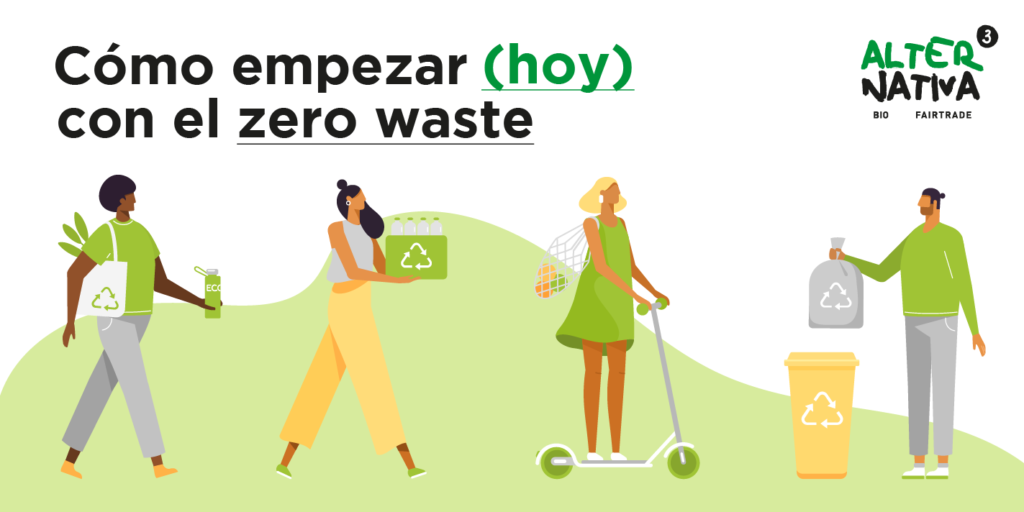
Here I explain 2 concrete and easy actions to get you started today. Really, Yes, it can.

Zero Waste - AlterNativa3

What is Zero Waste?

Zero Waste is a philosophy that proposes the need to reduce your footprint on the planet. Therefore, what it proposes is that you reduce the waste you generate.

How can a (normal) person practice Zero Waste?

To take action, Zero Waste recommends the 4Rs strategy:

  1. Reject
  2. Reduce
  3. Reuse
  4. Recycle

Many people and companies believe that, if we generate waste, the best solution is to Recycle.

But, if you look closely, recycling is not the first R... it's the last one! Why? Because recycling requires energy and also pollutes. And it means that we accept the current production model (which is not sustainable).

You see, don't you? Recycling all the rubbish is not the solution (and, in the long run, it is impossible).

How can I practice the 4Rs?

With patience and humour. You'll see, it's quite a change.


  • Reject. In other words, to say no.

That flyer you get on the street that you won't read? The calendar you get that you don't need? The takeaway coffee lid? Smile, but say no. Benefits? Less rubbish, more awareness and a brutal feeling of lightness.


  • Reduce. That is the key to responsible consumption. Buy only what you need.

This one really revolutionised my life. Apart from the savings, when you start buying only what you need, you feel a peace of mind that is incomparable.


  • Reuse. This is very interesting and will open up a world of possibilities. Bartering, second-hand shops, flea markets...

Now, before I buy something new, I send a WhatsApp message to my family: Does anyone have a spare rucksack? Who can lend me the drill for an afternoon?

Yesterday my mother gave me a tablecloth and 6 super nice napkins that I had forgotten in a drawer. Most people are delighted when they can give away things they don't use and free up space in their house.

It's quite an adventure and giving things a second (or third, or fourth life) will give you great personal satisfaction. 


  • Recycle.

    You already know that one.

Zero Waste and the 2030 Agenda -


Many people believe that the Sustainable Development Goals of the 2030 Agenda depend only on governments or companies.

They see the Goals as distant and feel powerless, because they do not know how to contribute.

But there are many concrete actions you can take today. One of the most powerful of these is Zero Waste.


Is there a link between Zero Waste and Fair Trade?

When I first became interested in Fair Trade I saw that many companies trading Fair Trade products also offered Zero Waste products.

At first I didn't understand it. I even thought it was some kind of marketing strategy. But now I see that the situation is very different.

Fair Trade and Zero Waste have the same objective and are two paths that lead to the same solution.

  • Do you remember what Zero Waste proposes? To change habits in your daily life to reduce your waste. With what aim? To protect people and the environment.
  • What does Fair Trade offer you?To change some of your shopping habits and replace commonly consumed products with more ethical and sustainable alternatives. With what aim? To protect people and the environment.

In short, they both seek Sustainable Development. 

In the end, it is all about practical strategies to achieve what is absolutely necessary:

  • Eradicating hunger
  • Curbing climate change
  • Creating a fairer world

How to get started with Zero Waste?

First phase: water bottle and cotton bags.

Really, that's how I started.

I made it easy for myself, I didn't want to do everything at once and, step by step, I expanded my actions.

The water bottle

Do you know how many plastic bottles are bought EVERY SECOND in the world? 20 000.

You probably carry a bottle of water in your bag or rucksack. Or you have one at your workplace, next to your computer. Replace it with a non-disposable one.

I started with the glass ones, but they were too heavy (and yes, one day one of them broke in my bag and it was quite a story).

Now I use these from AlterNativa3They keep the cold for 24h, keep the heat for 12h, you have several sizes and a lot of cool designs.

Cans and bottles of AlterNativa3

Cotton bags

They are useful for not using bags from supermarkets, greengrocers, etc. Small ones for cereals and nuts, larger ones for vegetables or bread...

You can buy them, sew your own with any piece of fabric you have at home...

Or, the simplest option, the one I started with: reusing the bags I was given at the supermarket. It's as simple as that.

Later on, you may want to buy others. I like the ones in the photo.

AlterNativa3 bags


They are made in India by the fair trade organisation Fair Gift. With the purchase of this bag you contribute to the women who make them to have better living conditions thanks to the fruit of their work.

They are handmade, hard-wearing and 100% cotton.


Shall we take action?

If I've been able to do it, so can you. The trick? Start small, work your way up to something easy. Don't get overwhelmed.

One day, take the cloth bags to the supermarket and see how you feel. If another day you're in a hurry and leave them at home, that's fine. Don't get discouraged. Take them the next day.

I practice Zero Waste. I do it very imperfectly, but I do it. I made the commitment a year and a half ago and I'm still making progress.

Remember: reusable bottle, cotton bags and bar of soap. With these three elements you can revolutionise the world. Where do you want to start?

If you need more information, here is a list of resources:

First, the books:

  • I started with this one, a little gem: "Living without plastic: Tips, experiences and ideas to give the planet a break" (Zenith Green, 2019). The authors, Patricia Reina and Fernando Gómez, are a couple and they explain how to make the transition to living without plastic (with a lot of humour and common sense).


  • One of the driving forces behind the Zero Waste movement is Bea Johnson, a mother who explained in her blog her journey to live as a family and reduce the waste they generated as much as possible. The blog became this book: "Residuo Cero En Casa. Guía doméstica para simplificar nuestra vida" In Spanish it was published by Pol-len edicions (El Tinter SAL).


  • And finally, "Y NOW WHAT DO I DO: How to avoid climate guilt and take action". In this book from 2021, published by Capitán Swing, environmentalist Andreu Escrivà analyses the current situation and provides you with food for thought.


Responsible shopping:

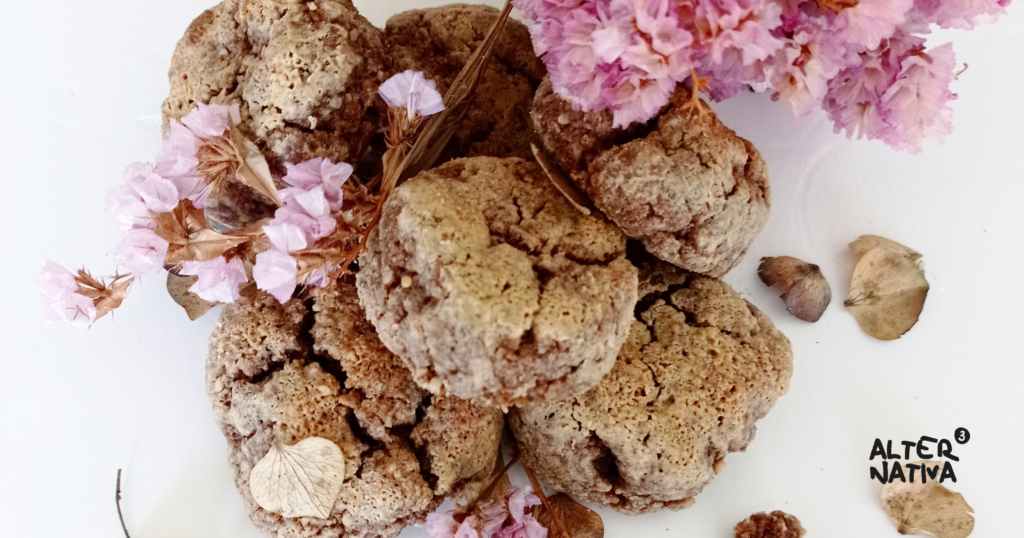
Mocha chai biscuit recipe! Sounds like a good plan for an afternoon snack, or for breakfast or... for any time of the day! @drabeatiful He prepared them with tahini, but if you don't like the strong taste of sesame, you can opt for white tahini or an unroasted white almond or cashew cream and replace the ground sesame with almond flour.

Ready to get into the kitchen? Discover the step-by-step!

Ingredients

  • 115 g tahini
  • 70 g butter at room temperature
  • 60 g erythritol
  • 100 g ground sesame seeds
  • 10 g vegan vanilla protein (or add more sesame flour and vanilla essence)
  • 1 tablespoon of the cocoa chai from AlterNativa3
  • 1 teaspoon of the chai coffee from AlterNativa3 sun drying
  • 1 egg
  • ¼ teaspoon psyllium
  • A pinch of salt
  • ½ teaspoon Royal baking powder 
  • ⅛ teaspoon baking soda, aluminium-free

Step by step

  1. Beat the tahini and butter until smooth.
  2. Continue beating at low speed and add the erythritol and the egg.
  3. Then add the sieved dry ingredients and continue beating until you get a homogeneous dough.
  4. Now roll the biscuits into slightly flattened balls, coat them with the vanilla protein and put them in the fridge for at least two hours.
  5. Finally, bake at 170 g for about 15 minutes and allow to cool completely before handling. Please note that they continue to harden outside the oven.

Now you have your recipe for moka chai biscuits. Easy, don't you think? enjoy!

"Let's rebuild with justice is the message that summarises the demands of the Fair Trade movement at international level and which 230 organisations in our country have signed up to. (NGOs, solidarity economy organisations, ethical finance, environmentalists, social enterprises, educational, health and consumer associations, scientific societies, etc.). On the occasion of World Fair Trade Day (Saturday 8 May), we join the declaration "Let's rebuild with justice" issued by an alliance of organisations from all over the world:

  • World Fair Trade Organization (WFTO)
  • Fair Trade Advocacy Office
  • Fairtrade
  • Intercontinental Network for the Promotion of the Social Solidarity Economy (RIPESS)
  • CIDSE (Together for the global justice)
  • Act Alliance EU
  • The International Federation of Organic Agriculture Movements (IFOAM- Organics International)
  • Social Economy Europe
  • Wellbeing Economy Alliance
  • International Cooperatives Alliance.

In this statement we call on institutions and political representatives to call for changes towards a fairer and more sustainable global economic and trade model in the post-COVID era.</p>

Our demands for this World Day are organised along four axes, from short-term and reactive to long-term and proactive proposals.</p>

PROTECT

  • Ensure that workers and producers have personal protective equipment.
  • As long as there are measures of social alienation and isolation, freeze taxes on businesses that produce basic necessities and guarantee affordable prices for basic necessities and for the inputs needed for agricultural production.
  • Freeze taxes on businesses that produce basic necessities and guarantee affordable prices for basic necessities and for the inputs needed for agricultural production.

RESET

  • Public incentive programmes should only go to responsible companies. They should comply with the UN Guiding Principles on Business and Human Rights. They should also comply with the OECD guidelines on responsible business conduct. They must implement responsible purchasing policies, promote gender equality and respect the environment. They have to make commitments to responsible tax behaviour. In addition, they must limit dividends to shareholders. Decision-making must be participatory and inclusive governance.
  • Ensure that small and medium-sized enterprises have access to accessible and flexible financing. Offer preferential conditions for Fair Trade, social enterprises, cooperatives and agents of the Social and Solidarity Economy.
  • Implement public policies that support Fair Trade, social enterprises and cooperatives. Also support organic farming and agro-ecological practices. These policies should help make these alternatives the norm. They should include business support for producer organisations to access new markets. Ensure preferential access to affordable and flexible financing. Promote public awareness, especially among young people.

RESTRUCTURE

  • Adopt legislation to ensure that all companies and their suppliers respect human, labour and environmental rights, among other aspects, by improving purchasing and marketing practices.
  • Adopt legislation to ensure that all companies and their suppliers respect human, labour and environmental rights, among other aspects, by improving purchasing and marketing practices.
  • Promote the gradual transformation of conventional, profit-focused businesses to mission-focused business models that put people and planet before profit.
  • Adopt ambitious national and, where appropriate, regional targets to achieve the UN Sustainable Development Goals, rapidly reduce CO2 emissions and ensure that the global temperature rise is limited to 1.5°C, as required by the Paris Agreement.


FAIR DISTRIBUTION OF RESOURCES

  • Reform tax systems to incentivise Fair Trade, organic products, social enterprises, cooperatives and other Social and Solidarity Economy actors and discourage supply chains based on the exploitation of people and the planet.
  • Reform tax systems to incentivise Fair Trade, organic products, social enterprises, cooperatives and other Social and Solidarity Economy actors and discourage supply chains based on the exploitation of people and the planet.
  • Make responsible public procurement the norm and give priority to Fair Trade, organic and social enterprises, cooperatives and other Social and Solidarity Economy actors in the awarding of public contracts.

With the declaration "Let's rebuild with justice" we, the organisations, are making a call on political representatives and international institutions to ensure that the recovery of the economy and trade in the post-COVID era prioritises Human Rights, the protection of the planet and is based on the values of Fair Trade and the Solidarity Economy./b>

You will find more information at https://comerciojusto.org/reconstruyamos-con-justicia/

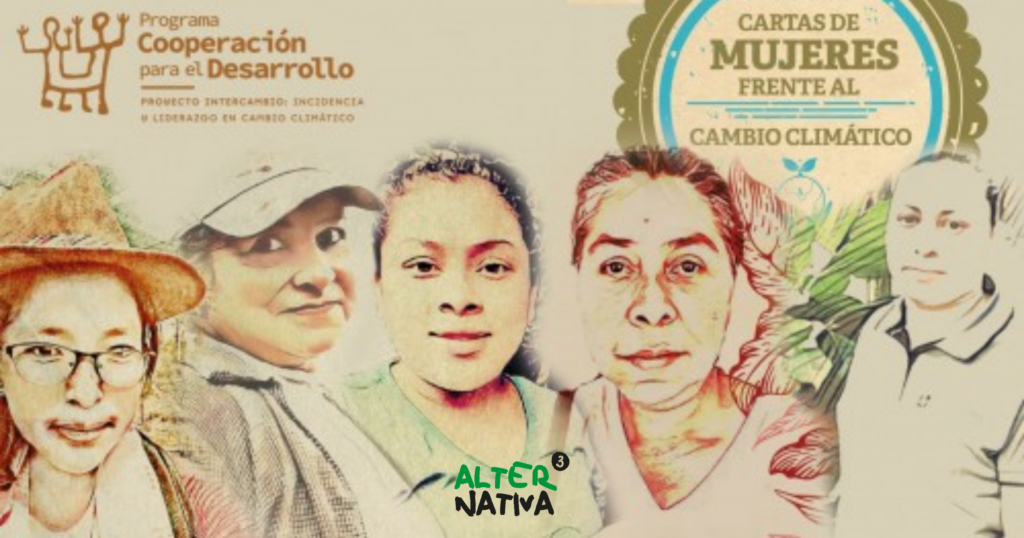
Faced with the effects of the climate changeIn Fairtrade farming and on the land in general, it is time to change the way things are done. And also to give a voice to the producers who have adapted to this phenomenon in order to do their bit for the conservation of the environment.

That's exactly what the initiative we're here to tell you about today is all about: the campaign's podcasts. Women's Letters on Climate Change. It features the words of five women from Nicaragua, Bolivia, Guatemala and Ecuador who have participated in INTERCAMBIO, a project that promotes producer leadership on climate change.

Fair Trade and climate change: five testimonies from women producers

These testimonies leave us with interesting reflections such as that of Irene Huarachi Arcayne, from the National Association of Quinoa Producers of Bolivia. Irene saysI'm thinking, "With all the changes we are seeing in the climate, I'm thinking that we are not taking care of mother earth.

He adds that it is sown without being fed, although he points out that some producers have improved their treatment of their plots.

Another testimony we can listen to in these podcasts is that of Lucía del Carmen Olivas Castellón, a leader of the El Colorado community in Nicaragua. Lucía del Carmen says that, at first, she did not know that the transformation the earth was undergoing was due to climate change. However, this changed when she started taking courses on the subject, just as it changed the way she treated her crops.

He explains that trees are no longer felled on his plot and that he has planted several local species, such as valerian, to conserve the soil.

At AlterNativa3 we value the work of these Fair Trade women climate change producers very highly. Don't miss out their testimonies!

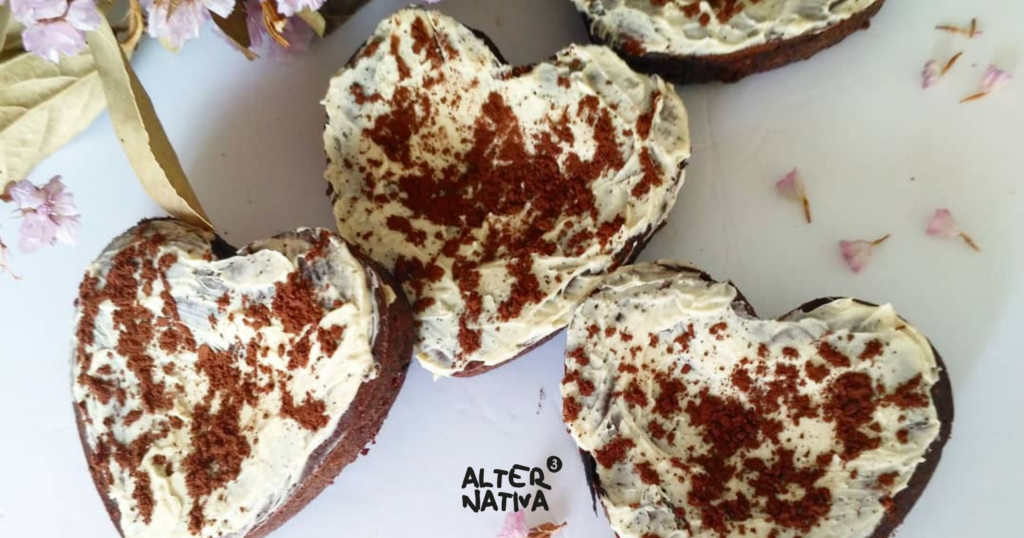
How to prepare a mocha chai brownie recipe using AlterNativa3 products? @drabeatiful brings us the ingredients and step-by-step instructions for you to enjoy homemade brownies for a snack, for dessert or... whenever you want! Read on and prepare them with us.

Ingredients:

  • 85 g of the chocolate 100 %
  • 40 g coconut oil
  • 40-50 g ground erythritol (@drabeatiful put 40)
  • 2 eggs at room temperature
  • 1 tablespoon of the freeze-dried soluble coffee from AlterNativa3
  • 1 tablespoon vegan vanilla protein (you can add more cocoa and add vanilla essence)
  • ¼ teaspoon salt

For coverage:

Step by step:

  1. Preheat the oven and prepare the tray we are going to use.
  2. Melt the chocolate with the coconut oil in a bain-marie. Then add half of the erythritol and stir on the heat until it dissolves, without boiling.
  3. Separate the egg yolks from the egg whites and whip the egg whites until stiff with the other half of the erythritol. Set aside.
  4. Mix the chocolate, cocoa, coffee, vanilla protein and salt with the egg yolks and gradually whisk in the egg whites until stiff with a spatula in an encircling motion. 
  5. Put everything in a baking tin or in several individual baking pans and bake in the oven for about 18 minutes.
  6. For the topping, we use coconut cream, butter and natural vanilla flavouring. We beat it all together and, finally, we pour the AlterNativa3 cocoa chai on top.

Ready to enjoy your moka chai brownie recipe?

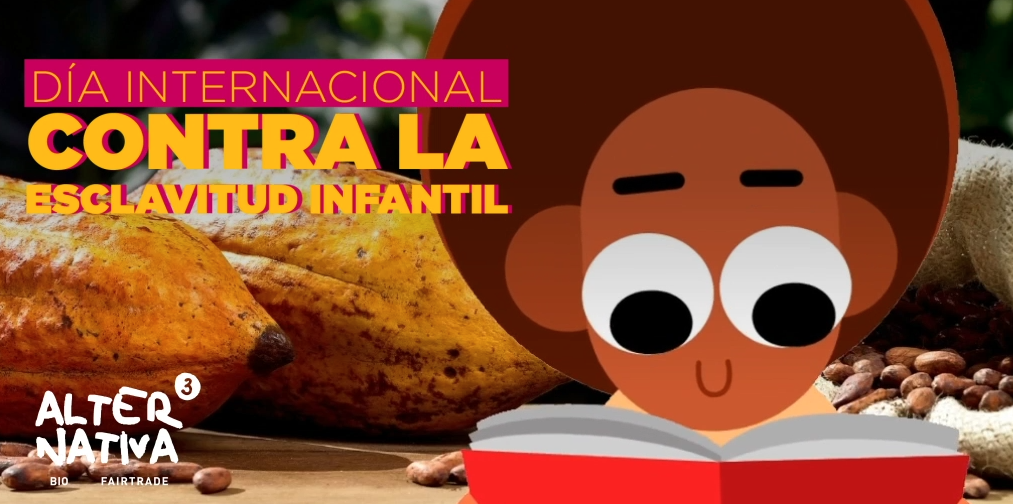
Today, and every day, AlterNativa3 joins the World Day Against Child Slavery cause. Even today we see how many children in the southern hemisphere work in exploitative conditions to produce products that we consume in our daily lives, often even performing dangerous tasks.

This problem goes even beyond the completion of jobs. In most cases, this situation even affects future working life due to lower qualifications. All this, of course, not to mention the physical and mental consequences.

That is why, at AlterNativa3 we have always given importance to responsible consumption.What is behind the products we consume? The clothes we wear? The coffee we drink in the morning? Only by reflecting on these issues can we take action and lead change.

When was the World Day Against Child Slavery born?

Why 16 April? This date was chosen as an acknowledgement of the work of Iqbal Masihwho spent most of his life being exploited by the factories after being sold by his father at the age of 4 to pay off a family debt. At the age of 10, he finally managed to escape, and devoted his efforts to working as an activist to get several of these factories closed down.

However, on 16 April 1995, he was murdered by mercenaries of the business mafias. It was in 1998 that this day was established to remember not only his case, but that of many other children who are exploited every day.

Today is the World Day Against Child Slavery, but change is in our hands every day. Will you join us? At AlterNativa3 we are waiting for you!

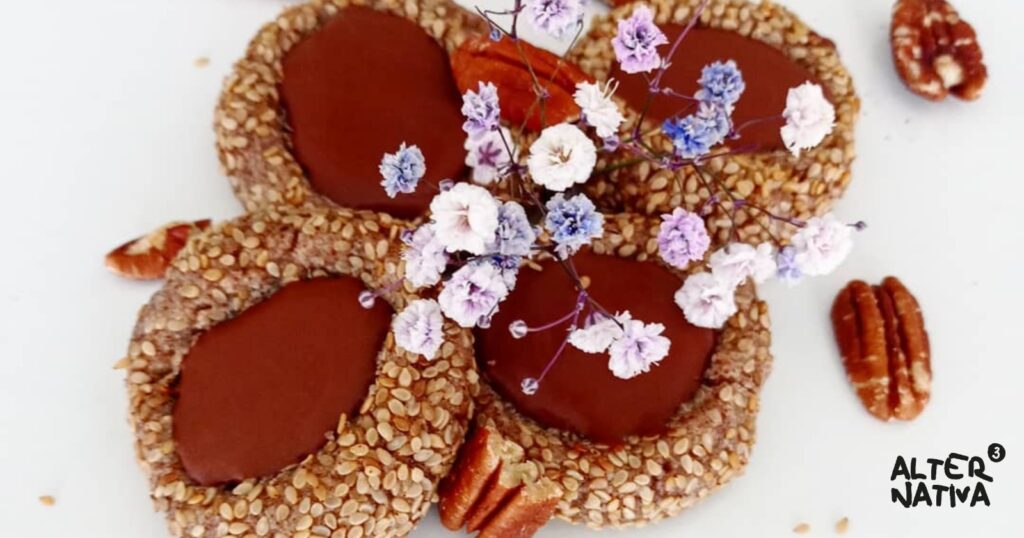
Would you like to try a vegan biscuits recipePerfect! @drabeatiful She explains how to prepare them with pecan nuts and a delicious chocolate cream filling - don't miss the step-by-step!

Ingredients

For the biscuits:

  • 80 g ground pecans or other nuts to taste
  • 2 tablespoons erythritol
  • 2 tablespoons white tahini
  • ¼ cup vegetable almond drink (or your choice of almond drink)
  • A pinch of salt
  • Sesame seeds

For the filling:

  • 4 ounces of the chocolate 100 % from AlterNativa3
  • A small can of coconut milk (only the solid part will be used)

Step by step

  1. First, grind all the ingredients, except those reserved for the filling and the sesame seeds, to obtain a dough.
  2. We then make small balls, each with one or two tablespoons of dough, and roll them in the sesame seeds to coat them. Flatten slightly and, using the back of a teaspoon, create a hemisphere for the filling.
  3. Bake for about 15 minutes and then allow the biscuits to cool completely before filling.
  4. For the filling, mix the solid part of the coconut milk with the chocolate. Heat it all in a bain-marie and mix so that both ingredients are well integrated.
  5. Remove the mixture from the heat and leave it to stand for a while to give it texture.
  6. Finally, fill the biscuits and put them in the fridge until the filling solidifies.

Have you got everything you need to prepare this vegan biscuit recipe? Enjoy!

Want to make a quick, tasty dessert with pure cocoa? This 3-minute choco mug cake recipe is perfect for when you're craving something sweet without the hassle. With our pure cocoa you will get an intense and authentic taste.

A quick recipe with a lot to offer

This recipe is simple, quick and allows you to control what you eat. What's more, by making it at home with natural ingredients and quality cocoa, you avoid unnecessary additives. It is ideal for a healthy and delicious treat at any time.

Ingredients for a choco mug cake

To prepare this mug cake you will need:

  • 4 tablespoons flour
  • 2 tablespoons sugar
  • 3 tablespoons of unsweetened cocoa powder
  • A pinch of salt
  • 1 medium egg
  • 3 tablespoons milk
  • ¼ teaspoon vanilla extract
  • 3 tablespoons melted and cooled butter
  • 3 tablespoons of mini chocolate drops

How to prepare a choco mug cake step by step

Preparing this mug cake is very simple and only requires a bowl and a microwave-safe mug.

Rapid preparation

- First mix the dry ingredients - flour, sugar, cocoa powder and salt - with a fork.
- Then add the milk, egg, melted butter, mini chocolate drops and vanilla extract.
- Stir well to integrate all ingredients.
- Pour the mixture into a cup or bowl and cook in the microwave for 2 minutes at 800 watts.
- If uncooked, add cooking time in 30-second batches until done.
- Hold off temptation a little: let it rest for a few minutes before unmoulding and taking the first bite.

Enjoy and share your creation

This mug cake is ideal for a quick treat or to surprise an impromptu snack. Its texture is smooth and its flavour is intense thanks to the pure cocoa.
Prepare your choco mug cake, enjoy and share your result on our Instagram profile for the AlterNativa3 community to see your talent.

Do you want to continue exploring healthy and delicious recipes with cocoa? We invite you to discover:

Avocado and Cacao Cream Soup

Creamy Lentils, Hazelnuts and Chocolate

Raw carob, cocoa and coffee biscuits

On the occasion of the celebration of the World Consumers' Rights DayOn 15 March, Fair Trade organisations want to stress that transparency in the supply chain is fundamental to avoid subhuman working conditions, child labour exploitation or environmental degradation.

It should also be noted that the Fairtrade seals are currently the only guarantees that ensure compliance with human, labour and environmental rights in the manufacture of products. 

Subhuman conditions

The accident in Tangiers on 8 February, in which 18 women and 8 men died in a clandestine textile workshop, has once again highlighted the subhuman conditions where many of the people who make the products we consume work.

In addition, a report by ILO, UNICEF, OECD and IOM concludes that a significant share of child labour, forced labour and human trafficking takes place in the first links of global supply chains, i.e. in agricultural and commodity extraction activities. 

Findings that confirm the data on child labour: 7 out of 10 children that work worldwide do so in the agriculture. In the cocoa sector alone, more than 2.1 million children in Ghana and Côte d'Ivoire work in hazardous work.

The role of Fair Trade organisations in consumer rights

Faced with realities such as these, Fair Trade organisations remind the consuming public that their right to know the traceability of products and to demand transparency from companies about their manufacturing processes at home and abroad. 

On the other hand, they recall that there are alternatives such as Fair Trade, which, through its seals of guarantee, ensures that products have been produced with respect for human, labour and environmental rights. 

There are currently 5 Fairtrade certifications endorsed as such: Fairtrade, Small Producers' Symbol, Fair for life, Naturland and the World Fair Trade Organization label.

Consumption is a political act, by choosing Fair Trade products we become part of the solution to the problem of the poverty and inequality that conventional international trade generates.

A chocolate tasting can become a fun way to have a good time with your friends, your family or on your own. It mainly consists of tasting chocolate to get to know all its properties, being aware of all the nuances that make it up.

Tasting chocolate means appealing to the senses. That is why it is vital that you do the tasting in a place away from the distractions of noises and smells, where you can relax and concentrate quietly. 

The basic rules for chocolate tasting

Before you start, there are some basic rules to keep in mind that will help you capture all the nuances and properties of each ounce:

Order from least to most cocoa:

Before you start, we advise you to order the chocolates from the lowest to the highest cocoa content. This will help in the perception of flavours, as if you start by tasting the most intense chocolates, the palate will probably become saturated. 

Do not open the chocolate prematurely:

We recommend open the chocolate shortly before tasting. In this way, you will prevent the aromas from being lost or the chocolate from picking up nearby smells.

The importance of the glass of water:

We suggest have a glass of water available during the chocolate tasting. This way you can cleanse your taste buds to perceive all the nuances.

Ready to go!

Cocoa has the most complex natural flavour, as you can find up to 400 different aromas in a single ounce. Therefore, when tasting chocolate, you should bear in mind that it is an exceptional food and put all your senses into the tasting.

What is your visual perception?

First start by look closely at the chocolate bar. Look to see if it has a shiny or matt appearance, if its surface is smooth or if it is rough or grainy. You should also take into account possible defects, such as white spots or streaks, which are symptoms of poor tempering or conservation. 

Auditory sensation: fundamental:

In the second step, the ear is the protagonist. When you break the chocolate you will hear a snap: if the snap is dry and clean, it means that you are in front of a very good quality chocolate, composed of healthy and very beneficial cocoa butter. At AlterNativa3 we take the ingredients of our chocolates very seriously. That is why they are all made by our cooperatives with high quality cocoa butter.

Pay attention to olfactory sensations:

It's time to smell the chocolate ounce, captures its aromas and all the nuances that make up its flavour.. Each type of bean, also depending on the way it has been treated, offers different aromas. Relax, breathe in slowly and appreciate the different notes of nuts, flowers, vanilla, ginger, orange, etc. In just one ounce of chocolate you can discover many different aromas. In just one ounce of chocolate you can discover many different aromas. Enjoy them!

Finish by analysing the taste sensation:

Now put your taste buds to work. Take a small piece of chocolate, break it with your teeth and let it melt slowly on your palate. At this point your taste buds will pick up a multitude of flavours and nuances.The ingredients used range from the most natural elements to those derived from cocoa roasting. 

Finally, we recommend you to relax and enjoy all the phases of the process. Do you dare to do your own chocolate tasting? At AlterNative3 We offer you a wide variety - you'll love it!


0
    Your shopping cart
    Your shopping cart is emptyBack to the shop