Chocolate - AlterNativa3

Author: Eugenia González.


Science, curiosities and humour to understand why we love chocolate. And discover that, if it's Fair Trade, it will taste even better.


Oh, chocolate. Picking up the bar, feeling the soft touch between your fingers. To break it open and hear that dry sound that promises you a quality chocolate. That rich aroma... And the taste! Whether it's the sweetness of milk chocolate, or the bitter taste of pure chocolate (or any of the thousand other combinations on the market), the sensation of chocolate melting in your mouth is unbeatable.

I recognise that, I love chocolate (in all its forms).

These are some of the ideas I have heard throughout my life:

  • My grandmother used to say that there are two types of people: those who love chocolate and say so. And those who love chocolate... but don't want to admit it.
  • A friend of mine was telling me that for her there are 4 food groups: pure chocolate, milk chocolate, white chocolate... and chocolates.
  • And my boss, who one day commented that chocolate does not bring happiness. But that's no reason not to eat it whenever you feel like it.

Do you identify with any of the phrases?

And like so many things that are very tasty, it sometimes has a bad reputation: it's fattening, don't eat too much, it has a lot of sugar.

So I decided to look for a few answers on my own to find out if it is a healthy product, which one to choose and how much chocolate we can eat every day.

I tell you everything-everything-everything... so you can decide for yourself. And at the end you will find a very special proposal to enjoy to the fullest.


WHY YOU LIKE CHOCOLATE (SO MUCH) - 1


First, why do we love chocolate so much?


Well, on a chemical level, it is one of the most complex foods in existence. Science has shown that it has more than 300 aromatic compounds (it is as complex as wine).

This complexity makes it an exquisite product that intoxicates all the senses.

After discovering that, I felt much better: how could I resist one of the most complex products ever discovered by science?


Secondly, why does eating chocolate make you feel so good?


It's happened to you, hasn't it? You're having a bad day, you need a hug... and you end up eating chocolate. Or you're bored (or sad, or tired...) and it seems that chocolate will solve all your ills.

As it turns out, yes, choco is capable of solving much of that discomfort.

How does it do this? Chocolate contains tryptophan, a precursor of serotonin. So when you eat chocolate, your brain ends up secreting serotonin (you know, the "happy hormone").

Mystery solved, it's not my imagination. A hug is better, of course, but sometimes a bit of chocolate can have (almost) the same effect.


Is chocolate an aphrodisiac?


Let's see... many studies have tried to prove that chocolate has aphrodisiac effects, but the results have been inconclusive.

There is, however, a very famous experiment that gives food for thought. During the test, the body's response to two stimuli was compared: good chocolate and a passionate kiss.

What happened? The chocolate generated an increase in brain activity and heart rate that was more intense than that of the kiss (!!!). But not only that... it turns out that the effect lasted 4 times longer.

As I said at the beginning, chocolate is unbeatable...


Is chocolate healthy?


Yes, there are many scientific studies to prove it. It contains more than 50 different nutrients that provide important benefits to your body.

  • Helps regulate blood pressure and blood flow to organs
  • It is rich in natural antioxidants and neutralises the damaging action of free radicals.
  • It is rich in flavonoids and this may reduce the risk of heart disease.
  • Helps to reduce "bad cholesterol
  • Stimulates defences and protects the skin

The beneficial substances are in the cocoa. Therefore, the higher the proportion of cocoa, the healthier the product.

Ideally, it should contain a minimum of 70%. 


What are the contraindications of chocolate?


I wish I had none. But there are two little things to bear in mind.

  • Chocolate is a calorie food. If you are an athlete, dance or do a lot of physical exertion in your daily life, the nutrients and calories make it an ideal food for you.

If you want to lose weight, then your situation is different... But the purer it is, the less fat and sugar it will carry. That's why, again, Ideally, you should consume chocolate with a minimum of 70% of cocoa.

  • Cocoa is a tonic product, which gives you energy. It is best avoided before going to sleep.


How much chocolate can I have each day?


Moderation is the key, they say. But I needed some more concrete data. So I kept digging and I found it:

Some health professionals recommend taking 1 to 2 ounces a day. That's about four squares.

So... you know.


WHY YOU LIKE (SO MUCH) CHOCOLATE - 2


CRAVING CHOCOLATE? HERE ARE TWO WAYS TO ENJOY


  • Chocolates of origin

If you are looking for pleasure and new flavours, I suggest we discover chocolates of origin.

Origin means that it has been grown in a specific area of the planet. The climate, the fertility of the soil, the place and time of harvest... these are all elements that will give a unique taste, aroma and texture to the product, so discovering chocolates of origin is a little adventure you might want to take.


  • Superfood Chocolates

This is a healthy and delicious option that combines the beneficial substances of cocoa with the intense and surprising flavours of SuperFoods.

AlterNativa3 offers you delicious blends: pure cacao with maca and ginger, pure cocoa with orange and cinnamon, pure cocoa with chai, …

My favourite? The pure cocoa with chai. It is cocoa with spices. It gives you a very special feeling of warmth and well-being (I prepare it with water and sometimes with vegetable milk). Super tasty.

pure cocoa with chai

HOW DO YOU KNOW IF A CHOCOLATE IS A QUALITY CHOCOLATE?


First of all, it must be environmentally friendly. It is very important that no chemicals have been used in the cultivation or production process. The only healthy chocolate is organic chocolate.

Secondly, it is important that it has been cultivated in a sustainable way. Care for the soil and protection of the ecosystem will give it a more intense flavour, a more delicate aroma and a greater supply of nutrients.

Remember: the more high cocoa contentthe healthier it will be.


organic cocoa


All AlterNativa3 chocolates are organic, sustainably grown and have a high cocoa content. They also carry the Fair Trade label.


Why is it so important for chocolate to be Fairtrade?


At home we only eat Fair Trade chocolate. And there is nothing missing, as there are plenty of options, both for us and for the kids.

The reality? If a chocolate is not Fairtrade, it is very likely that a child has been involved in its cultivation. Child labour, slavery and human trafficking are widespread in this crop.

It is a terrible reality, but it is imperative that we talk about it, that we are aware of it. You can contribute to the solution by buying Fair Trade labelled products.

When you choose a Fairtrade product you contribute to:

  • The elimination of child labour
  • Prosperity in producer communities
  • Gender equality
  • Environmental protection


Craving for choco?


Choosing a single chocolate is difficult, isn't it?

That's why today I'm not asking you to choose, but to... EXPLORE.

Have you ever done a chocolate tasting?

This is a fun activity to have a good time with your friends, family... or on your own! It consists of tasting chocolate to get to know all its properties, being aware of all the nuances that make it up.

Are you up for it? Here you will find a complete (but very easy) guide to set up a cocoa tasting at home.

https://alternativa3.com/como-hacer-una-cata-de-chocolate/

Prepare the ingredients for the muffin recipe

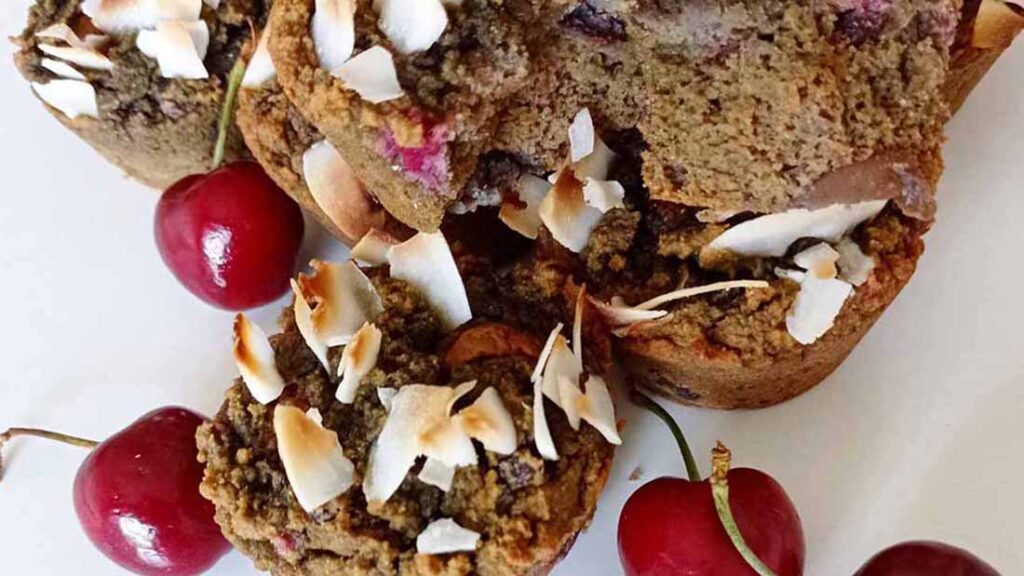
With the cold weather, what better way to enjoy this long weekend afternoon than to test the cherry, raspberry, chocolate and coffee muffins recipe from @drabeatiful.

Let's go step by step!

Remember that the coffee and chocolate you can buy it in our fair trade shop.

Ingredients

  • 100 grams of defatted almond flour
  • 10 grams vegan vanilla protein
  • 1 egg
  • A pinch of salt
  • 20 grams of erythritol
  • 125 ml of freeze-dried decaffeinated coffee
  • 100 grams of the chocolate
  • 60 ml coconut oil in liquid form
  • 2 tablespoons chocolate chips 100%
  • 1⁄2 teaspoon baking soda, aluminum free
  • 1⁄2 teaspoon apple cider vinegar
  • 50 grams of chopped cherry-raspberry mixture

Step by step

  1. Beat the egg with the erythritol until well integrated.
  2. Add the coffee and coconut oil and whisk again, mixing well.
  3. Add the sieved dry ingredients (including the baking soda and, finally, the apple cider vinegar to activate it).
  4. Add them to the wet mixture while whisking.
  5. Finally, stir in the fruit and chocolate with a spatula or wooden spoon.
  6. Pour into muffin tins and decorate with cherry halves and coconut chips.
  7. Bake for about 15 minutes at 150 degrees in a preheated oven. It is best not to open the oven to prevent the muffins from dropping.

Author: Eugenia González.

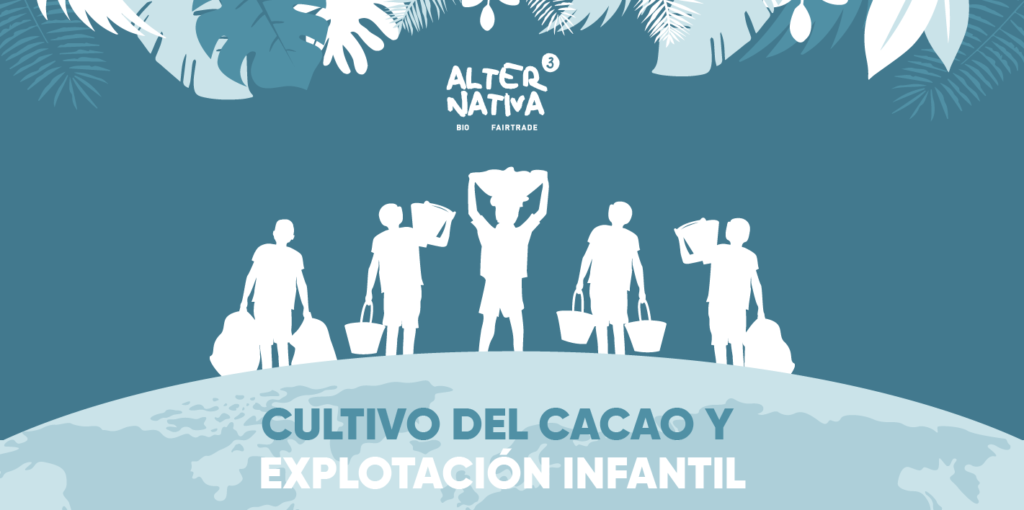
It is very likely that some of the products you consume on a regular basis promote child exploitation and slavery. Are you aware of this? Here are the keys to avoid this situation and encourage change.

What message do you send with your consumption habits?

I was once told that every time I buy a product, the manufacturer interprets my action in a very specific way: "he likes my product". The logical consequence? Make another product. And do everything exactly the same. Well, when I buy a chocolate bar that promotes child exploitation in Africa, the manufacturer interprets my action in a very specific way: "he likes my product". The logical consequence? Make another one. And do everything exactly the same.

So when I buy a tablet of chocolate promoting child exploitation in AfricaThe manufacturer interprets my action in a very specific way: "he likes my product". The logical consequence? Make another one. And do everything exactly the same.

The link between cocoa cultivation and child exploitation

What can you do?

I'm sure you don't want to contribute to this situation. I'm sure you do, and if you're like me, you'll feel terrible. Cocoa, in all its forms, is one of my favourite products and I never miss it at home, I love chocolate! And you, how many years have you been eating chocolate? Do the kids eat it? Do you have it at home often?

The truth? It pains me to talk about child exploitation. But I have come to the conclusion that the only way to change this situation is to raise awareness. If we don't speak out, we make the situation invisible, we deny the reality and we close the door to change.

The data raised my awareness

Child labour exploitation affects 11% of the world's children. That's 168 million children (data from the UNDP - United Nations Development Programme). And the crisis created by COVID-19 only worsens this situation.

Here is some food for thought:

  • More than one million children work in cocoa cultivation in West Africa.
  • Between 200,000,000 and 800,000 children under the age of 18 are trafficked every year in West Africa.
  • The cocoa industry is worth millions of euros in Europe.

Child labour is a violation of human rights:

  • It directly affects children's development.
  • It causes physical, psychological and emotional damage for the rest of their lives.
  • It perpetuates poverty for generations, as without education it is virtually impossible to climb the social ladder.

The International Labour Organisation states that: "under present conditions, unless measures are taken to alleviate it, poverty could be perpetuated from generation to generation".

What are the causes of child labour? It is a complex issue, but it is clear that it is rooted in poverty and the unfair conditions of conventional international trade. That is why Fair Trade, an ethical alternative to conventional trade, is a solution.

What should you ask yourself before buying cocoa? 2 things: is it organic and is it fair trade?

Is the chocolate organic? When talking about organic products, the focus is often on whether they have more nutrients than conventional ones, but I prefer to focus on what they do not contain: chemical fertilisers, synthetic herbicides, industrial fungicides... An organic product does not contain chemicals and for that reason it takes care of your health and that of your loved ones. On the other hand, if no harmful chemicals have been added, it means that the people involved in its cultivation or processing have not been exposed to these harmful substances either.

Is it Fair Trade?

The reality? Look, if a chocolate is conventional and does not carry a seal certifying that it is fair trade, it is more than likely that children in forced labour, slavery or human trafficking have been involved in its cultivation, processing, transport or marketing.

On the other hand, if it bears the Fair Trade label, it means that the cooperative (association of farmers) that wishes to have its products certified has adhered to the Convention on the Rights of the Child, which assures us that there will be no forced labour. Conditions will be put in place to ensure the welfare, safety, education and need to play of the children.

And thanks to the "premiums" that producers receive, children in the community have access to education, health, clean water... and not just children, but adults too. Fairtrade benefits the whole community.

Could Fair Trade be the solution?

Don't be fooled: FT supporters are not a handful of idealists, we are millions of consumers. Yes, we are not a majority and we have a long way to go, but we exist and with our actions we make a real difference in the lives of thousands of people every day.

How to take action today?

Fairtrade

Start replacing commonly consumed products with alternative, ethical and sustainable ones. To be sure that cocoa (or coffee, sugar, etc.) protects children, start substituting alternative, ethical and sustainable products. make sure that the product bears the Fair Trade label.

These products can be found in some supermarkets, although it is more common to find them in organic shops, health food shops and herbalists.

On the AlterNativa 3 website you have a lot of options of products made with cocoa (and they are all very tasty): pure chocolate, soluble cocoa, chocolate with superfoods, in bars, in origin, drops and coatings... And all of them are organic and Fair Trade. And with the security of supporting a company that has been committed to change for more than 40 years.

Organic Fairtrade chocolate and children

Start with a small action. And then move on to something easy. But don't stop, keep making changes, even if it's just one little thing every month: the soluble cocoa that the kids drink, that little gift in the form of chocolates that you take with you when you go to visit, the chocolate you use to make the cake, the chocolate chips you put in the muffins...
Start with a small action. And then move on to one easy thing. But don't stop. You (and I and so many other conscientious consumers) are the engine that makes change possible.

Yes, I encourage respect for children by buying Fairtrade chocolate.

A chocolate tasting can become a fun way to have a good time with your friends, your family or on your own. It mainly consists of tasting chocolate to get to know all its properties, being aware of all the nuances that make it up.

Tasting chocolate means appealing to the senses. That is why it is vital that you do the tasting in a place away from the distractions of noises and smells, where you can relax and concentrate quietly. 

The basic rules for chocolate tasting

Before you start, there are some basic rules to keep in mind that will help you capture all the nuances and properties of each ounce:

Order from least to most cocoa:

Before you start, we advise you to order the chocolates from the lowest to the highest cocoa content. This will help in the perception of flavours, as if you start by tasting the most intense chocolates, the palate will probably become saturated. 

Do not open the chocolate prematurely:

We recommend open the chocolate shortly before tasting. In this way, you will prevent the aromas from being lost or the chocolate from picking up nearby smells.

The importance of the glass of water:

We suggest have a glass of water available during the chocolate tasting. This way you can cleanse your taste buds to perceive all the nuances.

Ready to go!

Cocoa has the most complex natural flavour, as you can find up to 400 different aromas in a single ounce. Therefore, when tasting chocolate, you should bear in mind that it is an exceptional food and put all your senses into the tasting.

What is your visual perception?

First start by look closely at the chocolate bar. Look to see if it has a shiny or matt appearance, if its surface is smooth or if it is rough or grainy. You should also take into account possible defects, such as white spots or streaks, which are symptoms of poor tempering or conservation. 

Auditory sensation: fundamental:

In the second step, the ear is the protagonist. When you break the chocolate you will hear a snap: if the snap is dry and clean, it means that you are in front of a very good quality chocolate, composed of healthy and very beneficial cocoa butter. At AlterNativa3 we take the ingredients of our chocolates very seriously. That is why they are all made by our cooperatives with high quality cocoa butter.

Pay attention to olfactory sensations:

It's time to smell the chocolate ounce, captures its aromas and all the nuances that make up its flavour.. Each type of bean, also depending on the way it has been treated, offers different aromas. Relax, breathe in slowly and appreciate the different notes of nuts, flowers, vanilla, ginger, orange, etc. In just one ounce of chocolate you can discover many different aromas. In just one ounce of chocolate you can discover many different aromas. Enjoy them!

Finish by analysing the taste sensation:

Now put your taste buds to work. Take a small piece of chocolate, break it with your teeth and let it melt slowly on your palate. At this point your taste buds will pick up a multitude of flavours and nuances.The ingredients used range from the most natural elements to those derived from cocoa roasting. 

Finally, we recommend you to relax and enjoy all the phases of the process. Do you dare to do your own chocolate tasting? At AlterNative3 We offer you a wide variety - you'll love it!


0
    Your shopping cart
    Your shopping cart is emptyBack to the shop