
Fair Trade - AlterNativa3

In the middle of recovery of Covid-19This past 25 September was once again marked by several events. It was two years since the publication of the International Fairtrade Charter, five years since the adoption of the Sustainable Development Goals and we celebrated Fridays for Future's Global Day of Climate Action.

However, the complicated scenario we are facing has somewhat overshadowed events. Covid-19 has increased inequalities, put food sovereignty at risk and affected vulnerable people the most. Producers and workers in the Global South have largely suffered the consequences of the crisis. But what can we do to prevent this?

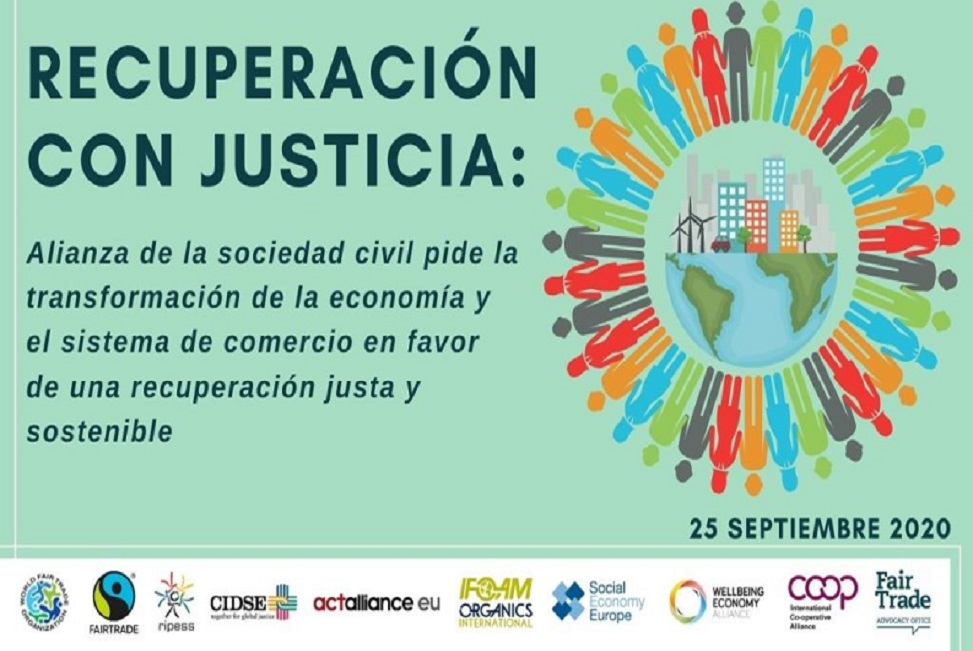
Several civil society organisations have come together for a just and sustainable recovery. To this end, they demand a transformation of the economy and the commercial system, key points to get out of the situation in which Covid-19 has put many collectives.

Who are the signatories of this declaration for the recovery of Covid-19?

The statement, which you can read in full hereThe Fairtrade Alliance is signed by the World Fair Trade Organization (WFTO); Social Economy Europe, Fairtrade, the Intercontinental Network for the Promotion of the Social Solidarity Economy (RIPESS); Act Alliance EU, CIDSE, The International Federation of Organic Agriculture Movements (IFOAM - Organics International), the Wellbeing Economy Alliance and The International Cooperatives Alliance. They will also be supported by the Fair Trade Advocacy Office.

To read the comments of the signatories, you can go to the original article by the State Fair Trade Coordinator. From AlterNativa3, We fully support this initiative to ensure that the recovery of Covid-19 is fair and equitable.
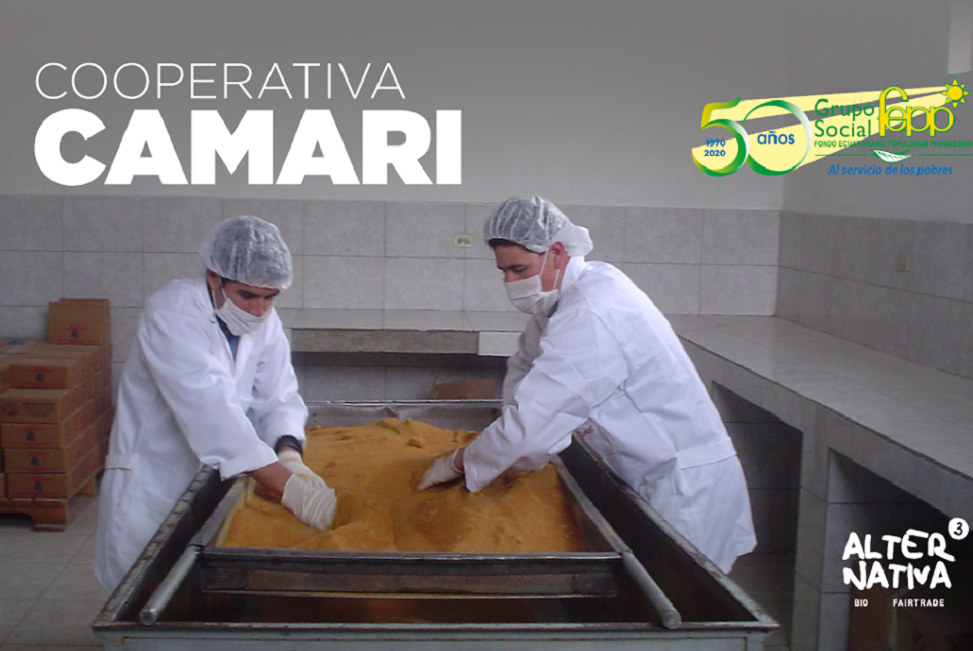
On 22 July, the Fondo Ecuatoriano Populorum Progressio (FEPP), to which the Camari Fair Trade cooperative belongs.celebrated its 50th anniversary. And at AlterNativa3 we wanted to dedicate this article to highlight the work it has done over these decades.

The FEPP was founded in 1970 under the leadership of Bishop Cándido Rada with the aim of creating a "common fund to assist the most destitute". And, in short, to contribute to the "development of humanity in solidarity". Since then, and up to the present day, it has consolidated itself as a social group that unites several entities in the search for welfare, equity and solidarity.

A social group with several lines of action, including Fair Trade.

In short, the EPPF has developed numerous lines of action that we would like to summarise:

  • Popular and solidarity finance, such as the donation of loans to institutions for various purposes. These would be, for example, the construction of housing and the strengthening of small businesses.
  • Vocational training and technical assistance for labour market integration.
  • Establishment and support of grassroots and second-tier organisations.
  • Promotion of access to land through legalisation, acquisition and titling of land in Ecuador's poorest cantons and parishes.
  • Development of integrated agricultural production systems for healthy food.
  • Support for the establishment of micro-enterprises that add value and quality to agricultural production.
  • Planting of forest and fruit trees and support for forests and agroforestry crops.
  • Establishment of community drinking water and irrigation systems.
  • Construction of houses, schools, health posts and other civil infrastructure.
  • Supply of tools and equipment for agricultural production.
  • Provision of basic IT tools for grassroots organisations.
  • Own publishing productions ranging from books to magazines.
  • Distribution of Fair Trade products marketed by Camarione of the cooperatives we work with at AlterNativa3 , as well as directly by the organisations. Camari, in fact, sells around 3.5 million dollars annually, adding to the local and national market the exports it makes to Asia, North America and Europe.

Happy 50th Anniversary!

Now that we have introduced you to FEPP - Camari is already available in our cooperatives section- It only remains for us to wish the people who make it up a happy 50th anniversary! And, of course, may it continue to do so, because at AlterNativa3 we love to support organisations that, beyond Fair Trade, work for solidarity and collective well-being.

How does the Fair Trade to the fulfilment of the Agenda 2030? We talk about the Sustainable Development Goals that the United Nations took on in 2015, with the idea of achieving some specific targets in 15 years from then.

Although you may think that they are two different things, the truth is that they have a lot in common. In fact, you could say that they are two paths with the same objectives. With both we come to the conclusion that development is not only about the economic aspect; we have to look at the social, human and ecological aspects.

But what specific points do they have in common? Let's break them down.

Fair Trade and Sustainable Development Goals: together to care for the environment

One of the principles of Fair Trade is the respect for the environmentwhich contributes to the SDGs on climate action and living terrestrial ecosystems.

On the other hand, this production model encourages responsible agricultural practices, which favour the environment and its good conservation. In this way, the essence of Fair Trade has a lot to do with Sustainable Development Goal 12: responsible production and consumption.

Better working and living conditions

Fair Trade has among its principles a fair pay and good working conditionsThe United Nations has set decent work and economic growth as one of its objectives. It should be noted that many poor people have a job, but it does not meet the conditions necessary to eradicate these poor living conditions. Fair Trade and Agenda 2030 come together to fight for fair wages and minimum labour rights.

Likewise, to speak of Fair Trade is to say no forced labour and child labour. This is not only in line with the decent work goal set out in the 2030 Agenda; it also contributes to achieving quality education. Of course, children should be studying and not working, and this is what Fair Trade organisations are working for.

Equality: a common goal

We close this article by talking about equality: an objective that is found both among the principles of Fairtrade and among the Sustainable Development Goals. Among the former we find the principle of "No discrimination, gender equality and freedom of association".. The 2030 Agenda coincides on this point, as one of its main points is gender equality.

You must also bear in mind that equality is necessary to truly eradicate poverty. We can therefore find a link to this goal as well.

As you can see, Fair Trade and Agenda 2030 go hand in hand. Are we fighting for these goals?

0
    Your shopping cart
    Your shopping cart is emptyBack to the shop